
Ask someone why they just did something, and they’ll almost always have an answer ready: confident, specific, reasonable-sounding. The trouble is, neuroscientist Michael Gazzaniga has spent a career showing, the answer is very often not true. It’s not a lie exactly, but a story invented on the spot by a part of the brain that has no idea what actually caused the behaviour.
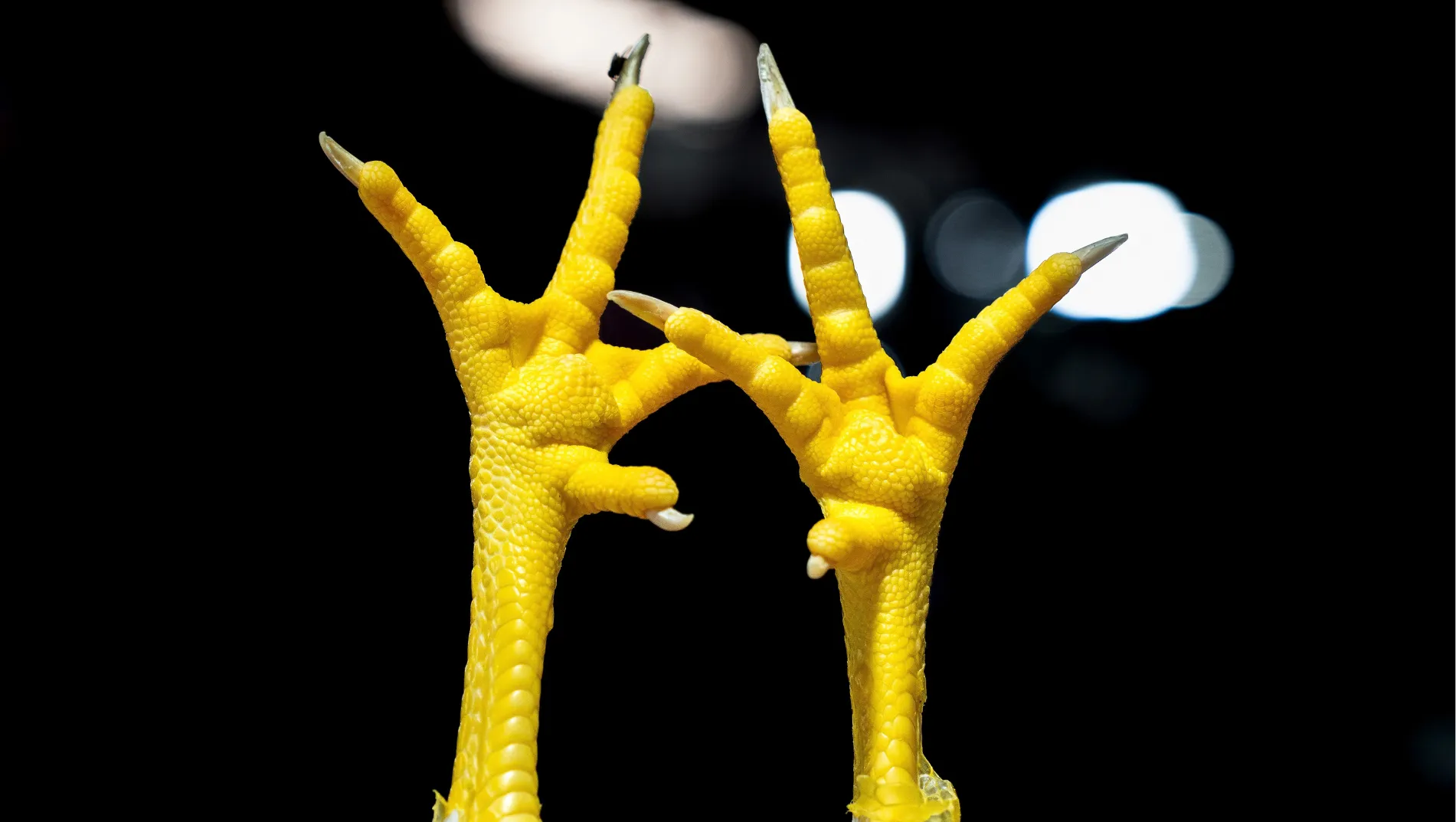
His most famous demonstration involved a chicken claw.
In the late 1970s, Gazzaniga and his colleague Joseph LeDoux were working with a young man known in the research as P.S. Like a small number of people with severe epilepsy, P.S. had undergone surgery to cut the corpus callosum, the thick bundle of fibres that connects the brain’s two hemispheres. The operation controlled his seizures, and in everyday life he seemed entirely normal. But the two halves of his brain could no longer share what they saw.
That made a remarkable experiment possible. P.S. stared at a dot in the centre of a screen while two pictures were flashed, too briefly for his eyes to move. On the right side was a chicken claw, which went only to his left hemisphere, the half that controls speech. On the left side was a snowy winter scene, which went only to his right hemisphere, the half that can understand but can’t talk.
He was then shown a row of picture cards and asked to point to the ones that matched what he’d seen. His right hand, guided by the left hemisphere, pointed to a chicken. His left hand, guided by the silent right hemisphere, pointed to a shovel, a perfectly sensible choice for a snowstorm.
Then came the crucial question: why did you choose those two?
The talking half of his brain had seen only the chicken claw. It had no idea a snow scene existed. P.S. didn’t hesitate or say he didn’t know. He explained, easily and with complete conviction, that the claw went with the chicken, and “you need a shovel to clean out the chicken shed.”
It was a neat, logical, entirely invented answer. His speaking brain had watched his own hand pick up a shovel, found no reason for it, and simply made one up. He wasn’t lying. He believed it.
Gazzaniga calls this mechanism the “interpreter”: a system in the left hemisphere whose job is to explain. When it’s missing information, it doesn’t leave a gap. It confabulates, building a plausible story for behaviour it had no part in causing, and believes that story completely.
What makes the finding unsettling isn’t the surgical patients. It’s the implication for everyone else. The same interpreter is running constantly in our intact brains, stitching feelings, choices and impulses into a tidy narrative after the fact, whether or not that narrative bears any real relationship to what actually happened underneath. People aren’t lying when they explain themselves. They’re doing something closer to guessing, convincingly and without knowing they’re guessing at all.
For anyone doing therapeutic work, the idea lands with particular weight. A client’s confident account of why they feel or act a certain way may be a perfectly coherent story and still be almost entirely beside the point: a narrative laid over causes the interpreter never had access to in the first place.
The brain is always telling itself a story. The question is whether anyone checks it against what’s actually true.
Source: interview, Vol. 33 No. 3 (Winter 2013), pp. 1, 25-26
The Doodles That Became a Psychological Mystery
The drawings looked like nothing. A young woman, asked to simply doodle whatever came to mind, produced a page of loose, idle marks — the kind of thing anyone might sketch on the corner of a notepad during a phone call. She wasn’t trying to say anything. That was rather the point.
Milton Erickson and psychoanalyst Lawrence Kubie looked at the doodles differently. Where most people would see meaningless scribble, they saw a document — a place where something the young woman hadn’t said out loud, and perhaps hadn’t fully let herself know, had leaked out onto the page anyway. Doodles, unlike speech, don’t pass through the same filters. Nobody rehearses a doodle.
Reading the marks the way one might read a dream, Erickson and Kubie began piecing together a shape underneath the shapes — a pattern that pointed toward specific, troubling circumstances in the young woman’s life, details she had never stated outright in conversation, whether because she hadn’t consciously registered them or because she’d never found a way to say them plainly. The doodles, it turned out, had been saying them all along.
What had started as an offhand exercise — draw whatever, it doesn’t matter — became the thread that unraveled what was actually happening to her. Nothing about the technique was mystical; it simply took seriously the idea that the hand can know things the mouth hasn’t gotten around to admitting, and that an unguarded page is sometimes more honest than an guarded conversation.
I didn’t know I’d told anyone until they told me what I’d said.
Source: Annette Poizner, “Rock, Paper, Scissors,” Vol. 34 No. 2 (Summer/Fall 2014), p. 5
The Punchline That Did the Work
A cab driver, a man named Bill, and a widower named Sean never met each other. What they shared was a moment where the right joke, delivered at the right time, did what a straight conversation couldn’t.
The cab driver brought it up himself, unprompted, somewhere in the middle of a ride — his wife had left him for another man, and he was still turning the humiliation of it over and over. Therapist Michael Hoyt, riding in the back seat as a passenger rather than a clinician, offered him a joke built around a case of mistaken identity — “the cop she ran off with” — light enough to land as funny, sharp enough to nudge the story sideways. By the end of the ride, the driver wasn’t just laughing. He’d started talking about the situation as something he’d escaped rather than something that had been done to him.
Bill’s situation needed a gentler touch. He’d shut down every direct attempt to talk to him about his drinking, so Hoyt stopped trying to talk to him about it directly and told him a story instead — three brothers, scattered by distance, meeting each other in spirit every evening at five o’clock by each ordering “three beers” at whatever bar they happened to be in, a small ritual of connection across the miles. Later in the story, one brother orders only two. The regulars around him panic, assuming the worst, until he explains: he hasn’t lost a brother, he’s quit drinking. Bill got the joke, and more than the joke — he cut back sharply on his own drinking not long after.
Sean’s grief had no joke in it at all, at first. His father had just died of cancer, and Christmas was coming, and he couldn’t imagine getting through it. Therapist Joseph Goldfield didn’t try to talk him out of the grief. He told Sean about his own father instead — funny stories, the kind that make you laugh before you remember to feel sad — modeling that humor and loss aren’t opposites, that you can hold both at once. Sean recognized the same thing in how his own father used to cope with hard things, and that Christmas, his family changed how they spent the day together: less bracing for grief, more room for a little joking around.
Nobody told me I was allowed to laugh about it. I just needed someone to go first.
Source: Michael F. Hoyt & Joseph Goldfield, Vol. 42 No. 2, p. 10