
The throw
Carl Hammerschlag was not an easy man to frighten. He stood 6 foot 6, with a voice people remembered for the rest of their lives.
But when he first met Milton Erickson, the old man in the wheelchair got the better of him in a second.
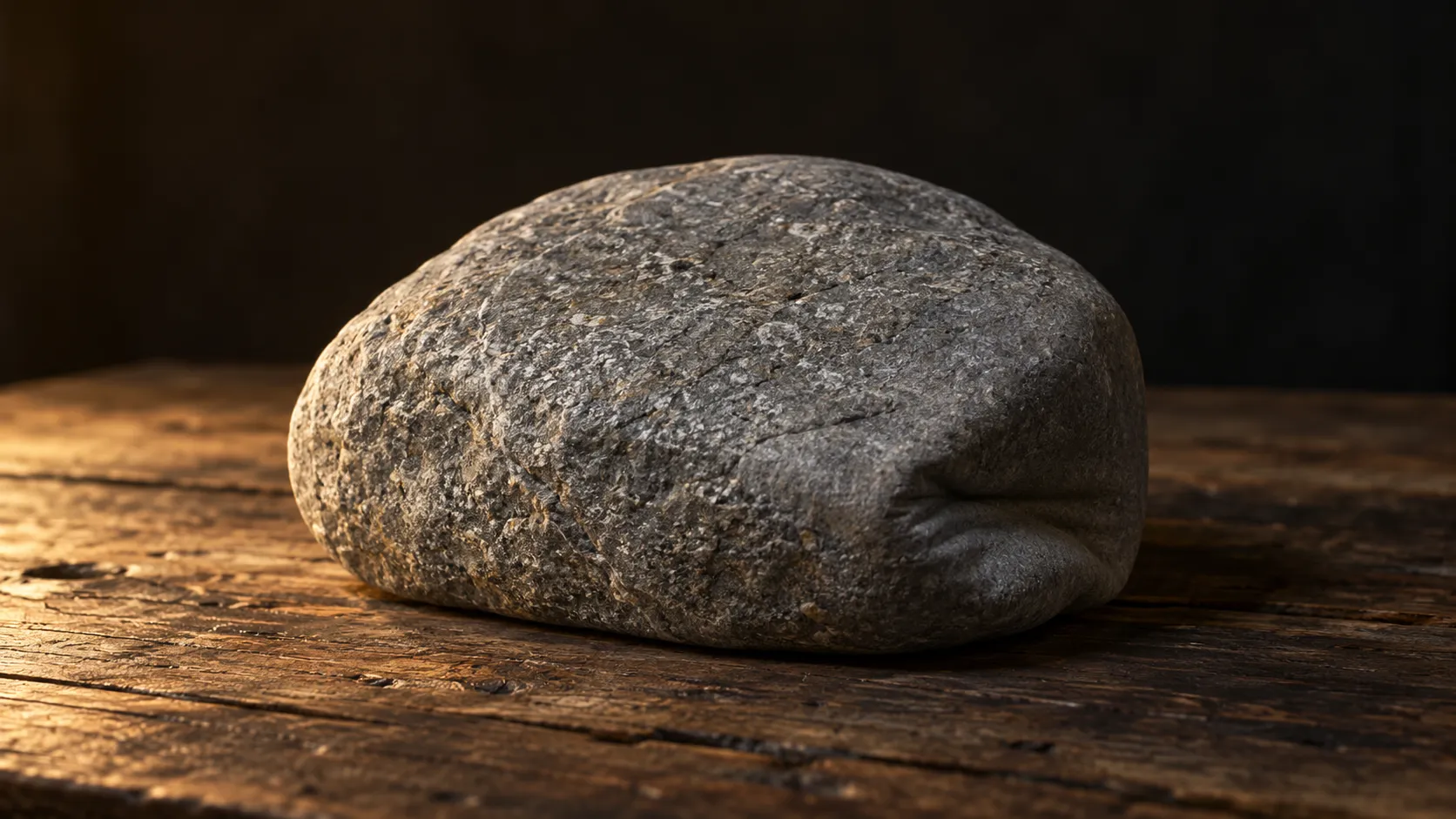
It was one of Hammerschlag’s favourite stories, and he told it often. Erickson, dressed in purple and sitting in his wheelchair, seemed to be struggling to pick up a heavy rock. With obvious effort, he finally got it into his lap. Then he threw it straight at Hammerschlag’s crotch.
The giant instinctively covered himself. Then he realised the rock was made of foam.
Erickson had a twinkle in his eye. He smiled and said: “Not everything you see is what you see it as. It is only how you see it at the moment.”
Hammerschlag later said it felt like being with a medicine man in his hogan, a traditional Navajo dwelling. Coming from him, that was the highest compliment he could pay. By then he had spent years learning from medicine men. And his education in healing had begun, years earlier, with an old man in a hospital bed who asked him a very strange question.
The doctor who had to learn to dance
Hammerschlag’s parents had left Nazi Germany in 1936, hoping to build a safe life in America. Their son became a Yale-trained psychiatrist, and spent almost twenty years as chief of psychiatry at the Phoenix Indian Medical Center, from 1970 to 1986. There, as he often said, he learned the difference between being a doctor and being a healer, and he learned it in Indian Country, not in medical school.
The lesson started early in his career, when he was working at a Native American hospital in the Southwest. He was introduced to a patient named Santiago, an old man from the Santo Domingo Pueblo who had been admitted with congestive heart failure. To the young doctor, Santiago was just an old man in a hospital bed with tubes in his nose. He didn’t know that Santiago was a clan chief and a Pueblo priest.
Santiago asked him where he had learned to heal. Hammerschlag, thinking it was a question about his qualifications, rattled off his medical education, his internship and his certification.
The old man replied: “Do you know how to dance?”
To humour him, Hammerschlag shuffled his feet a little beside the bed. Despite his condition, Santiago got up and showed him the proper steps. You have to be able to dance if you’re going to heal people, he told the young doctor. When Hammerschlag asked whether he would teach him his steps, Santiago said he could, but Hammerschlag would have to hear his own music.
That conversation became the heart of Hammerschlag’s book The Dancing Healers, published in 1988, and of the rest of his working life. He went on to work alongside Native American healers, to found the Turtle Island Project, which brought mind-body medicine together with Native American ceremony, and, late in life, to travel the world as a humanitarian clown dressed as a bright pink flamingo.
The book also records Erickson’s line about the rock. Hammerschlag kept it with him for the rest of his career.
What both teachers were showing him, the Pueblo priest and the old hypnotist, was that healing depends on more than the physical facts in front of you. It depends on what those facts mean, and on how they’re seen. And as it happens, the foam rock is a near-perfect lesson in how the brain sees.
Why his body believed the rock
Hammerschlag’s body didn’t wait for evidence. It saw a big grey rock, saw an old man straining to lift it, and prepared for impact.
Scientists have studied a related effect for well over a century. In 1891, the French physician Augustin Charpentier described what’s now called the size-weight illusion: if you lift two objects of exactly the same weight, the smaller one feels heavier. Your brain predicts weight from appearance, and when the prediction is wrong, it changes what you feel.
The modern twist is remarkable. In a 2000 study, the neuroscientists Randall Flanagan and Michael Beltzner measured the force people’s fingers used as they repeatedly lifted a large and a small object of identical weight. At first, people used too much force on the big object and too little on the small one. After a few lifts, their fingers adjusted perfectly to the true weight.
But people still felt the illusion. Their hands had learned the truth, while their perception stayed fooled. The researchers concluded that the illusion comes from higher-level perception, not from a simple mismatch in the hands.
In other words, what we feel about an object is built from what we expect it to be, and those expectations can be stubborn, even when part of us already knows better.
The hand that isn’t yours
Hammerschlag flinched to protect a body part that was never really in danger. Psychologists have found a way to make people do exactly that in the laboratory.
In 1998, Matthew Botvinick and Jonathan Cohen described the rubber hand illusion. A rubber hand is placed in front of a person while their real hand is hidden from view. Both are stroked with brushes at the same time. Within less than a minute, most people begin to feel that the rubber hand is their own, and that they can feel the touches on it.
Then the experiments became more dramatic. In 2003, Carrie Armel and V.S. Ramachandran showed that if the rubber hand was then “injured”, people showed a strong stress response in their skin, even though nothing had been done to their real hand. Later researchers bent the rubber fingers back forcefully, or threatened the fake hand with a needle, with similar results. Brain scans have shown that threatening a rubber hand people feel is theirs triggers activity in areas linked to anxiety.
The body reacts to what the brain believes, not to what is physically there. A foam rock aimed at your groin is, for that first instant, a real rock.
Seeing what we expect
Erickson’s line was about more than bodies. It was about how we see the world. A famous experiment from 1949 shows just how far that goes.
The Harvard psychologists Jerome Bruner and Leo Postman flashed playing cards at 28 students for fractions of a second. Most were normal, but some were trick cards, printed with the colours reversed: a red six of spades, a black four of hearts.
The trick cards took far longer to recognise than normal ones. Often, the students didn’t see the anomaly at all. They simply saw a normal card, because that’s what a card is supposed to look like. Others reported compromise colours: a red six of spades became a “purple” six of spades, or a six of clubs seen “in red light”.
A few were genuinely shaken. Unable to make sense of what they were seeing, some became distressed. One student exclaimed that he was no longer sure what a spade even looked like.
The historian of science Thomas Kuhn found the experiment so revealing that he used it in The Structure of Scientific Revolutions to explain how scientists, too, can fail to see what doesn’t fit their expectations.
Not everything you see is what you see it as. Erickson put in one sentence what Bruner and Postman spent years demonstrating.
The meaning of medicine
If perception is shaped by expectation and meaning, so is healing. That was the thread Hammerschlag spent his life following.
The anthropologist Daniel Moerman, writing with the physician Wayne Jonas in 2002, argued that what medicine calls the “placebo effect” is badly named. A sugar pill, after all, does nothing by itself. What does something is its meaning. They proposed a better term, the meaning response: the physical and psychological effects that come from the meaning of an illness and its treatment.
Moerman and Jonas pointed out that meaning runs through all of medicine. The colour of a pill, the brand name on the box, the confidence of a doctor, the ritual of a hospital visit: all of these carry meaning, and all of them can affect how people respond. They ended with a striking warning: that modern medicine had impoverished its meanings to such a degree that it simply didn’t work as well as it might.
The medicine men Hammerschlag worked beside had never forgotten. Navajo healing, for example, is built around hózhó, a word Hammerschlag’s friend Joyce Mills described as meaning beauty, balance, harmony and health. Its ceremonies treat illness as something that involves the whole person, their community and their place in the world. Hammerschlag summed up what he learned with a line he often repeated: healing takes place when what the mouth says, the mind thinks and the heart feels are all in alignment.
Erickson, in his own way, practised the same art. He used stories, surprises and unexpected objects, sometimes a foam rock, to change how a person saw things. What he and the medicine men shared was an understanding that the way a person sees their situation is part of the situation itself.
Hearing your own music
Hammerschlag died in January 2022, at the age of 82. To the end, he told people to come to every day with joy, and to hear their own music.
It’s easy to picture him retelling the story of the rock: a towering man, laughing at himself for flinching at a piece of foam thrown by a frail old man in purple. But behind the laugh was a serious lesson, one that science has spent a century confirming. Our bodies brace for what we expect. Our eyes see what we believe a thing should be. And healing, whether in a Pueblo, a hogan or a hospital, depends on what our experiences mean to us.
As Erickson told him, with that twinkle in his eye: it is only how you see it at the moment. And how we see it can change.
Further reading
Carl Hammerschlag
- Mills JC. “In Memory of Carl A. Hammerschlag.” The Milton H. Erickson Foundation Newsletter, Vol. 42, No. 1 (April 2022); also published on the Foundation’s blog. https://www.erickson-foundation.org/blog/zhqqhso0bll25gklttx3y5lcwaoe61
- Hammerschlag CA. The Dancing Healers: A Doctor’s Journey of Healing with Native Americans. Harper & Row, 1988.
- Lieberman S. “The Death of Our Dancing Healer, Carl Hammerschlag, MD.” Psychiatric Times, 25 January 2022. https://www.psychiatrictimes.com/view/the-death-of-our-dancing-healer-carl-hammerschlag-md
The size-weight illusion
- Charpentier A. “Analyse expérimentale de quelques éléments de la sensation de poids.” Archives de Physiologie Normale et Pathologique. 1891;3:122–135.
- Flanagan JR, Beltzner MA. “Independence of perceptual and sensorimotor predictions in the size–weight illusion.” Nature Neuroscience. 2000;3:737–741. https://link.springer.com/article/10.1038/76701
- Flanagan Lab, Queen’s University. “Distinct sensorimotor and perceptual weight memories.” https://www.flanaganlab.com/home/projects/distinct-sensorimotor-and-perceptual-weight-memories
The rubber hand illusion
- Botvinick M, Cohen J. “Rubber hands ‘feel’ touch that eyes see.” Nature. 1998;391:756.
- Armel KC, Ramachandran VS. “Projecting sensations to external objects: evidence from skin conductance response.” Proceedings of the Royal Society B. 2003;270(1523):1499–1506. https://pmc.ncbi.nlm.nih.gov/articles/PMC1691405
- Ehrsson HH, Wiech K, Weiskopf N, Dolan RJ, Passingham RE. “Threatening a rubber hand that you feel is yours elicits a cortical anxiety response.” PNAS. 2007;104(23):9828–9833. https://pmc.ncbi.nlm.nih.gov/articles/PMC1887585
The trick playing cards
- Bruner JS, Postman L. “On the perception of incongruity: a paradigm.” Journal of Personality. 1949;18:206–223. https://psychclassics.yorku.ca/Bruner/Cards/
- Kuhn TS. The Structure of Scientific Revolutions. University of Chicago Press, 1962.
The meaning response
- Moerman DE, Jonas WB. “Deconstructing the placebo effect and finding the meaning response.” Annals of Internal Medicine. 2002;136(6):471–476.
- Moerman DE. Meaning, Medicine, and the “Placebo Effect”. Cambridge University Press, 2002.
Leave a Reply