
Before Joe Goldfield became a psychiatric social worker, he worked in the theatre, practising mime and improvisation.
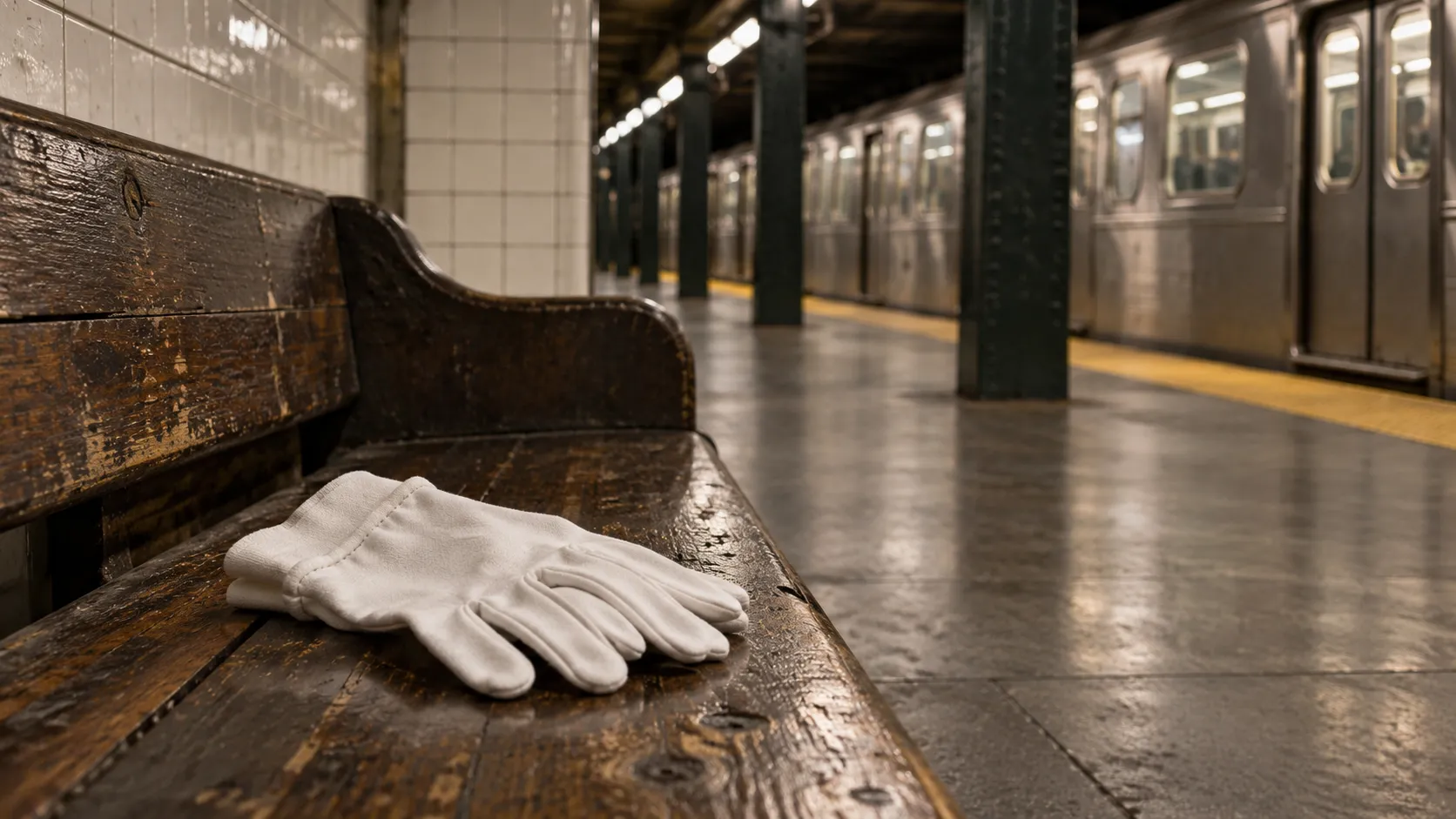
One day in New York, he got off the subway at the wrong station and decided to take a shortcut on foot. He didn’t get far. A group of young men surrounded him, and one demanded his money. Goldfield took a quick look around. He couldn’t run, he certainly couldn’t fight, and he knew he couldn’t talk his way out.
Then he had a flash: maybe he could mime his way out.
He began acting as though he physically couldn’t speak. He pointed at his mouth. He gestured back and forth as if he were lost and confused, and he made hand movements that looked like American Sign Language. One of the group decided, sympathetically, that he must be mute. The mood changed in an instant. As Goldfield remembered it, one of them said, “Hey, we gotta help him. Otherwise, he’s gonna get hurt.”
The young men who had surrounded him to rob him now surrounded him to protect him. They walked him back to the station and stayed until he was safely on the train and it had pulled away.
Goldfield later described it as one of those moments when he surprised himself. He hadn’t planned any of it. It simply came.
It’s a remarkable story. It also touches on something researchers have studied for decades: how threat works, why some people are targeted, and how an unexpected response can change everything.
Why some people are chosen
In 1981, two researchers in New York, Betty Grayson and Morris Stein, ran an unusual experiment. They secretly filmed ordinary pedestrians walking down a busy city street, then showed the footage to prison inmates convicted of violent assaults. They asked the inmates a simple question: who would you pick as an easy target?
The inmates largely agreed with one another. And their choices had less to do with people’s size or sex than with how they moved: the length of their stride, how they lifted their feet, whether their movements looked coordinated. People who looked unsure of themselves were picked far more often.
The lesson is unsettling but useful. A great deal of communication happens before a single word is spoken. Goldfield’s attackers had read his body before he acted, and then he used his body to change what they read.
Lowering your status
Keith Johnstone, the British director whose 1979 book Impro shaped improvised theatre around the world, taught that every human interaction involves a constant, mostly unconscious negotiation of status: who is dominant, who defers, who is a threat. Improvisers learn to raise or lower their status at will, through posture, eye contact, voice and movement.
Seen through Johnstone’s eyes, Goldfield did something very precise. He didn’t challenge the group, and he didn’t try to out-talk them. He dropped his status almost to zero, becoming someone so harmless and so obviously in need that robbing him no longer fitted the scene. The script the group was following, this is a target, suddenly didn’t apply. A new script took its place: this is someone who needs help.
The woman who talked a gunman down
Goldfield’s escape is an extreme example of something trained negotiators know well. One of the most striking real cases happened in a school office in Georgia in 2013.
In August that year, a young man armed with a rifle entered an elementary school near Atlanta and fired shots. Antoinette Tuff, the school’s bookkeeper, found herself alone with him in the front office. While on the phone to emergency services, she began talking to him not as a threat, but as a person. She told him about her own hard times, how she had been through pain too, and that it would be all right. She told him she cared about him.
Gradually he calmed down. He put down his weapons, lay on the floor and waited for the police. Nobody was hurt. The recording of her emergency call, released afterwards, became one of the most widely heard examples of de-escalation in recent years.
Like Goldfield, Tuff didn’t fight, and she didn’t try to argue. She changed the relationship. And she later said she hadn’t planned what to say. It simply came to her.
What negotiators know
The FBI has studied how this works. Its crisis negotiators are trained in what’s known as the Behavioral Change Stairway Model, described by Gregory Vecchi, Vincent Van Hasselt and Stephen Romano in 2005. It sets out a sequence:
- Active listening
- Empathy
- Rapport
- Influence
- Behavioural change
The insight is that you can’t jump straight to the top step. People rarely change what they’re doing because someone tells them to. They change once they feel understood, and once a connection has formed.
Goldfield climbed the whole staircase in seconds, without saying a word. His miming showed the group a vulnerable person, they felt sympathy, and the sympathy became a connection. Their behaviour changed completely.
Inside the improvising brain
Goldfield said he hadn’t planned it, and that’s exactly how improvisation feels from the inside.
In 2008, Charles Limb and Allen Braun at the US National Institutes of Health scanned the brains of professional jazz pianists while they played memorised pieces and while they improvised. During improvisation, activity dropped in the dorsolateral prefrontal cortex, a region associated with self-monitoring and deliberate control. Other areas linked to self-expression became more active. In a sense, the musicians’ inner critic stepped back, and something more spontaneous took over.
That fits closely with how Goldfield and Tuff described their experiences: not deciding what to do, but finding themselves doing it. Years of practice had built the skill, and in the moment it worked without needing permission.
Improv as therapy
If improvisation can help in a crisis, can it help with everyday fears too? Researchers have started to test that.
In 2019, psychologist Peter Felsman and his colleagues at the University of Michigan reported that a short course of improvisational theatre training reduced social anxiety in teenagers. A related study found that improv experience was linked to greater tolerance of uncertainty and more flexible, creative thinking. Those are exactly the capacities that let someone respond well when life goes off-script.
Improvisers spend hours practising one core skill: accepting whatever happens and building on it, rather than freezing or fighting it. In theatre it’s called “yes, and…”. Milton Erickson had his own name for the same idea in therapy: utilisation, working with whatever a person brings instead of against it.
The therapist he became
After the theatre, Goldfield trained as a social worker and spent much of his career working with adolescents, many of them uninterested in adults or openly hostile to them. Commenting on his story in the Erickson Foundation newsletter, psychologist Eric Greenleaf noted that Goldfield had turned a dangerous situation into a cooperative one without saying a word. It’s not hard to see the same skill in his work with defiant teenagers: meeting hostility not with force, but with something unexpected.
And that may be the real lesson of the story. Goldfield didn’t escape because he was strong, fast or clever with words. He escaped because, at the moment it mattered, a capability he’d built for entirely different reasons was there waiting for him, and he let it take over.
Most of us carry more of those capacities than we realise. We usually find out only when we need them.
Goldfield’s quick thinking worked in one extraordinary moment. It isn’t a self-defence plan. If you’re ever threatened, handing over your belongings and getting to safety remains the best advice.
Further reading
- Goldfield J. “An Improvisation.” Case Report, with commentary by Eric Greenleaf. The Milton H. Erickson Foundation Newsletter. Vol. 46, No. 1 (April 2026), p. 10. https://www.erickson-foundation.org/s/EricksonNews-46-1-WebFinal2.pdf
- Grayson B, Stein MI. “Attracting assault: victims’ nonverbal cues.” Journal of Communication. 1981;31(1):68–75.
- Johnstone K. Impro: Improvisation and the Theatre. Faber & Faber, 1979.
- Vecchi GM, Van Hasselt VB, Romano SJ. “Crisis (hostage) negotiation: current strategies and issues in high-risk conflict resolution.” Aggression and Violent Behavior. 2005;10(5):533–551.
- Limb CJ, Braun AR. “Neural substrates of spontaneous musical performance: an fMRI study of jazz improvisation.” PLoS ONE. 2008;3(2):e1679.
- Felsman P, Seifert CM, Himle JA. “The use of improvisational theater training to reduce social anxiety in adolescents.” The Arts in Psychotherapy. 2019;63:111–117.
- Felsman P, Gunawardena S, Seifert CM. “Improv experience promotes divergent thinking, uncertainty tolerance, and affective well-being.” Thinking Skills and Creativity. 2020;35:100632.
- Tuff A, with Tresniowski A. Prepared for a Purpose: The Inspiring True Story of How One Woman Saved an Atlanta School Under Siege. Bethany House, 2014.