In the mid-1930s, a young researcher at McGill University in Montreal was trying to make his name by discovering a new hormone.
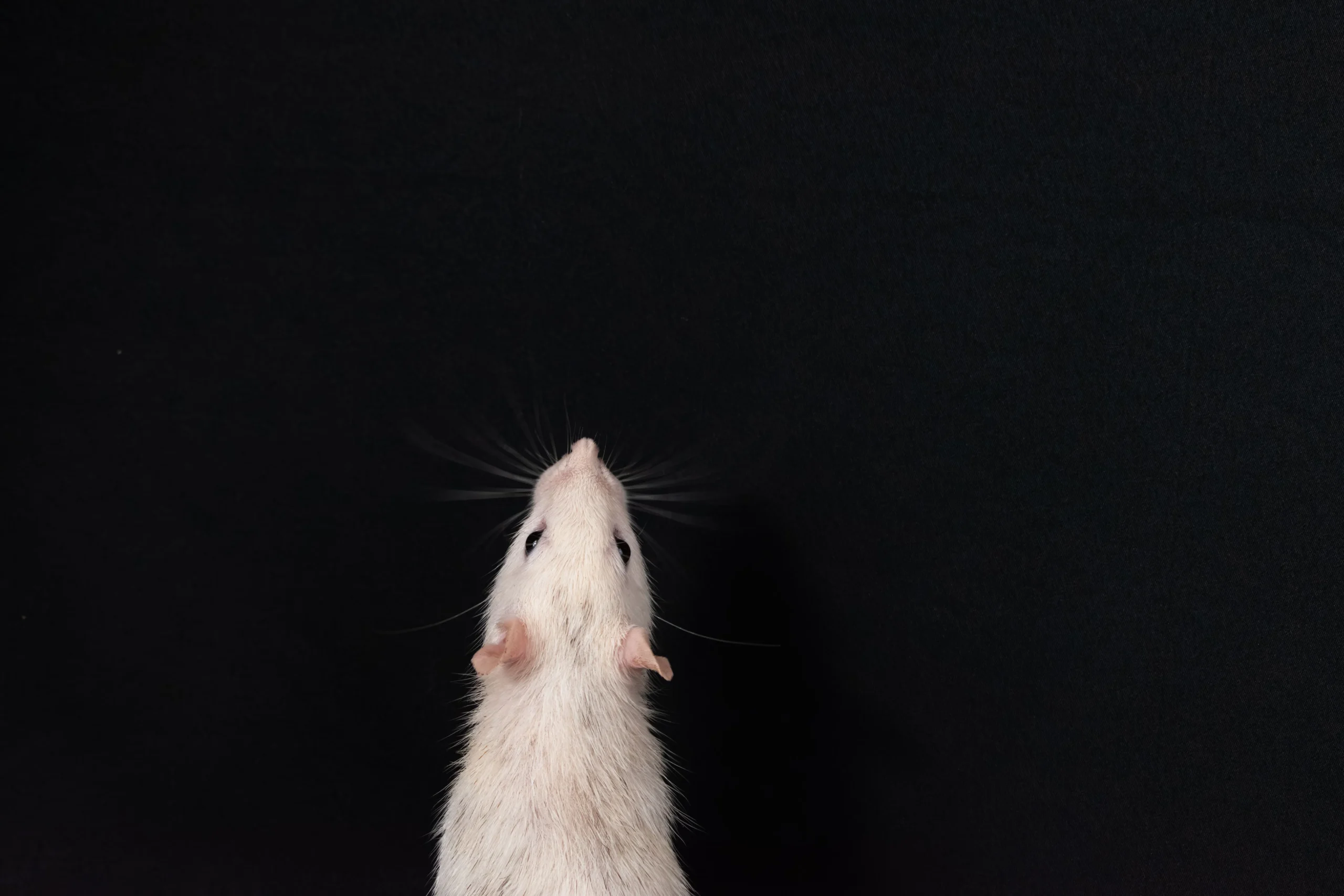
Hans Selye had a plan. Every day he would inject laboratory rats with extracts from cow ovaries and watch what happened. The trouble was that Selye was, by his own cheerful admission, hopeless with rats. He fumbled the injections. The rats wriggled free and escaped across the lab. He spent a good part of each day chasing them around with a broom.
When he finally examined them, the results looked thrilling. The rats had bleeding stomach ulcers, swollen adrenal glands and shrunken immune tissue. Surely, he thought, this was the effect of a new hormone.
Then he examined his control rats, the ones injected with nothing but plain salt water. They had exactly the same damage.
It wasn’t the extract at all. It was the ordeal: the clumsy injections, the escapes, the broom. Selye went on to show that cold, exhaustion, injury and fear all produced the same pattern in the body. He published his findings in Nature in 1936, and he spent the rest of his career explaining the idea to the world. Eventually he borrowed a word from engineering for it: stress.
What stress does to a body
Selye built on an idea from Harvard physiologist Walter Cannon, who around 1915 coined the phrase “fight or flight” for the body’s emergency response. Your heart speeds up, your breathing quickens, your muscles tense, and stress hormones flood the bloodstream.
That response is brilliant for escaping a predator, or a researcher with a broom. The problem comes when it never switches off.
In 1998, researchers at Ohio State University found a way to measure just how much that matters. They recruited dental students and made a tiny, identical wound on the roof of each student’s mouth, twice. The first time was during the relaxed summer holidays. The second was three days before major exams.
The wounds made before exams took about three days longer to heal, roughly 40% slower. Nothing physical had changed. The students simply had exams coming up.
Stress, in other words, isn’t only a feeling. It shows up in your tissues.
Can hypnosis change that?
One of the researchers behind the dental study, psychologist Janice Kiecolt-Glaser, wanted to know whether the damage could be reduced.
In a 2001 study, she and her colleagues followed medical students through a stressful exam period. Some of the students were taught hypnotic relaxation and encouraged to practise it on their own. As exams approached, the students who didn’t learn hypnosis showed the expected drop in key immune functions. The hypnosis group showed a smaller drop.
But the most telling finding was about practice. The students who used hypnosis most often were the ones who showed the most protection. Those who learned it and rarely used it gained little.
That’s an important lesson about hypnosis for stress. It works less like a medicine and more like a skill: the more you practise, the more reliable it becomes.
You don’t have to be relaxed
Most people picture hypnosis for stress as lying back with your eyes closed, feeling heavy and calm. That can be part of it, but it doesn’t have to be.
In 1976, Hungarian psychologist Éva Bányai worked with Ernest Hilgard at Stanford to test something unusual. Volunteers were hypnotised while pedalling hard on an exercise bicycle, with their eyes open, being told they were becoming more alert and energetic rather than more relaxed. They turned out to be just as responsive to hypnotic suggestions as people hypnotised in the traditional, drowsy way.
Bányai called it active-alert hypnosis. It matters for stress, because the stressful moments in life rarely happen while you’re lying down. Hypnosis can be about staying focused, clear and steady in the middle of things, not just switching off afterwards.
If deep physical calm is what you’re after, our guide to relaxation hypnosis goes into that side in more detail.
The technique worth learning: anchoring
The single most useful hypnotic tool for everyday stress is probably anchoring. It’s built on one of the oldest discoveries in psychology: Ivan Pavlov’s finding that a signal paired often enough with a response will eventually trigger that response on its own.
The idea is simple. While you’re in a calm, focused state, you pair it again and again with a small physical cue, such as pressing your thumb and middle finger together, or resting a hand flat on your chest. Over time, the cue starts to bring back a little of that calm state by itself, wherever you are.
In a session, a hypnotherapist will usually:
- help you reach a genuinely settled, focused state
- ask you to recall a time you felt steady and capable, in as much detail as possible
- pair that feeling with your chosen cue, several times
- have you rehearse a stressful situation, such as a difficult meeting or a phone call you’re dreading, using the cue at the moment the stress would normally rise.
Between sessions, the practice is what makes it work, as Kiecolt-Glaser’s students showed. A minute or two each day, repeating the pairing while calm, builds the anchor. Then, when you’re in a meeting and feel your shoulders tighten, you press your fingers together, and your body remembers.
It won’t stop stressful things from happening. But it can shorten the time it takes to recover from them, and that is often the difference between a hard day and a hard month.
Stress and confidence
A lot of stress is really anticipation: the presentation next week, the interview, the difficult conversation. In those cases, hypnosis often works on two fronts at once, calming the body and rehearsing yourself handling the moment well. Our article on hypnosis for confidence looks at that overlap.
How strong is the evidence?
Hypnosis has its strongest research support in areas where stress and the body overlap, such as pain, procedural anxiety and irritable bowel syndrome. Studies on general everyday stress are fewer and smaller, though findings like the medical students’ immune results are encouraging. People also differ in how responsive they are to hypnosis. For a fuller picture, see our guide to whether hypnosis works.
When stress is more than stress
If stress comes with chest pain, panic attacks, persistent low mood, sleep that has fallen apart, or thoughts of harming yourself, it’s time to talk to a doctor or psychologist. Hypnosis can still be part of the plan, but it shouldn’t be the whole plan.
It’s also worth knowing that in Australia, as in many countries, hypnotherapy isn’t government-regulated. Anyone can call themselves a hypnotherapist. Look for membership of a recognised professional association, proper insurance, and training you can verify.
The broom
Hans Selye’s rats didn’t get sick because of anything in the syringe. They got sick because their lives had become a daily series of alarms. That was his great insight: the body doesn’t much care what the threat is, only that it keeps coming.
The good news hidden in his discovery is that the reverse also seems to be true. Teach the body, again and again, what safety feels like, and it starts to learn that too.
Further reading
- Selye H. “A syndrome produced by diverse nocuous agents.” Nature. 1936;138:32.
- Cannon WB. Bodily Changes in Pain, Hunger, Fear and Rage. Appleton, 1915.
- Marucha PT, Kiecolt-Glaser JK, Favagehi M. “Mucosal wound healing is impaired by examination stress.” Psychosomatic Medicine. 1998;60(3):362–365.
- Kiecolt-Glaser JK, Marucha PT, Atkinson C, Glaser R. “Hypnosis as a modulator of cellular immune dysregulation during acute stress.” Journal of Consulting and Clinical Psychology. 2001;69(4):674–682.
- Bányai EI, Hilgard ER. “A comparison of active-alert hypnotic induction with traditional relaxation induction.” Journal of Abnormal Psychology. 1976;85(2):218–224.
Leave a Reply