
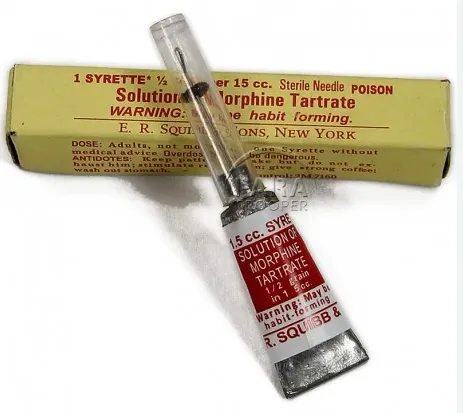

Why badly wounded men refused painkillers, how a little girl learned to divide her pain, and what science has discovered about the pain we make in our minds
Anzio, 1944
Henry Beecher had been trained to believe something simple: the worse the injury, the worse the pain. Then the war put him in charge of pain relief for badly wounded soldiers in Italy, including on the beachhead at Anzio, and the simple rule began to fall apart.
Beecher was an anaesthetist, and he offered pain relief to the men as they were brought in. To his astonishment, many declined, including about a third of the most seriously wounded. When he asked them whether they had any pain, more than 70 percent said no.
These weren’t men in shock or confusion. Beecher described them as mentally clear. Among seriously wounded soldiers he questioned within twelve hours of injury, a quarter reported only slight pain, and a third reported none at all. In total he documented 225 soldiers with severe wounds, and about three-quarters had so little pain that they didn’t ask for relief.
He published his findings in 1946, in a paper called “Pain in Men Wounded in Battle”. Later, back home in Boston, he made a comparison that sharpened the mystery: civilian men with similar wounds from surgery asked for pain relief far more often.
Why? Beecher’s answer was that the same wound meant different things. For a civilian, a serious wound meant disaster: lost work, an uncertain future. For a soldier, it could mean survival, and a ticket away from the front. His colleague Louis Lasagna later teased Beecher for having a flair for the dramatic, but the core insight stuck. Pain, Beecher came to believe, wasn’t a simple matter of stimulus and response. It was complex, personal and variable.
Beecher wasn’t alone in noticing it. Twenty years later, Milton Erickson wrote of men in combat, seriously wounded, who didn’t discover their injury until later.
So if the same wound can hurt terribly or barely at all, where does pain actually come from?
Pain in an arm that isn’t there
The strangest answer comes from people who feel pain in limbs they no longer have.
Phantom limbs, the vivid sense that an amputated arm or leg is still there, have been described by doctors since the nineteenth century. Often the phantom limb hurts: it cramps, clenches or burns. In the 1990s, the neuroscientist V.S. Ramachandran tried something remarkably simple.
He placed a mirror upright inside a box. When a patient put their remaining hand into one side and moved it, the reflection appeared exactly where the missing hand should be, so it looked as though the missing hand itself was moving. Remarkably, patients felt the phantom move. Some had been living with a phantom hand painfully clenched in a spasm they couldn’t release. When they watched the reflection open, they felt the phantom hand open too, and the spasm eased. Without the mirror, they couldn’t do it.
He made the first one from a cardboard box and a cheap mirror.
If a mirror can relieve pain in a hand that doesn’t exist, then pain can’t simply be a message travelling up from the body. Something in the brain is building it.
The dogs and the flame
One of the people who did most to explain how came to the question through a strange observation.
In the early 1950s, Ronald Melzack was a young psychology student at McGill University in Montreal, working with the psychologist Donald Hebb, who was studying dogs raised in relative isolation. Melzack noticed that these dogs reacted bizarrely to pain. When he lit a match, they would push their noses into the flame, back away, and then push their noses straight back in again. A normal puppy, he later said, would never let you near it with a flame, and if it touched it once, it would never do it again.
That, Melzack recalled, was when the idea of a “gate” first came to him.
In 1965, he and the physiologist Patrick Wall published the gate control theory of pain in Science. They proposed that “gates” in the spinal cord could be opened or closed, both by signals coming up from the body and by signals coming down from the brain. Melzack’s own summary was simple: if information is important, the brain opens the gate, and it shuts the gate to the unimportant.
It overturned the old view of pain as a fixed alarm system. It also explained, in principle, Beecher’s soldiers: the brain can turn pain down when other things matter more.
Pain is a construct
In April 1965, the same year Melzack and Wall published their theory, Milton Erickson gave a paper on pain control at an international hypnosis congress in Paris. His description of pain was startlingly modern.
Pain, he wrote, is “a complex, a construct”, made of past remembered pain, present pain, and pain anticipated in the future. The present sensation is only a third of the experience. Nothing intensifies pain so much, he said, as the fear that it will still be there tomorrow. And the knowledge that pain is a single event that will come to a pleasant end greatly diminishes it.
Because pain is a construct, Erickson argued, it is more open to change than if it were simply a sensation in the present. Then he set out a list of hypnotic techniques for changing it:
- abolishing it, directly or indirectly
- forgetting it
- numbing it
- replacing it with another sensation
- reinterpreting it
- distorting time
- gradually diminishing it.
And one more, which he called displacement: moving pain from one part of the body to another.
Moving the pain
Erickson’s example of displacement is unforgettable. He described a man dying of cancer, suffering intractable abdominal pain that neither drugs nor deep hypnosis could relieve. The man was medically trained and understood the idea of referred pain. In trance, he accepted that while the pain in his abdomen meant something terrible, the same pain in his left hand could be bearable, because there it wouldn’t carry the same threat.
So the pain moved to his left hand. He protected the hand carefully, and the pain there didn’t stop him being fully present with his family for the remaining three months of his life.
Erickson didn’t remove the pain. He moved it somewhere it meant less.
The girl who divided her pain
Years later, a woman named Cheryl Becker described discovering almost exactly the same thing, as a small child, entirely on her own.
She couldn’t remember exactly how old she was, only that she was very young, and that she and her little sister were still sleeping in the same bed while their father finished building separate rooms in the attic. The two girls already had plenty of practice dividing things between them.
One day she hurt her foot. She didn’t recall how, but she vividly remembered the pain. Her big toe hurt so much she could barely sleep, while her sister slept soundly beside her.
As she tossed and turned, an idea came to her: if she could divide the pain in two, it would be easier to bear. So she tried moving half of it into her other big toe. It worked. Then she wondered: why not divide it again? She sent half the pain from her toes into her thumbs. And then, in her own words: “I got so carried away with my success that I kept dividing the pain until eventually I no longer had any pain anywhere.”
Thrilled, she shook her sister awake. She had just invented something, she announced, and she was going to call it “Division of Pain”. Her sister looked at her sleepily, told her she was crazy, turned over and went back to sleep. Cheryl decided she didn’t care what her sister thought. It was very important.
She was right. Without knowing it, she had found her way to the technique Erickson called displacement. And by halving the pain again and again, she had also stumbled on something like the mathematics he used for diminution. Erickson would suggest that a 1 percent reduction in pain wouldn’t be noticeable, nor would 2 or 3 percent, yet small, imperceptible reductions could add up, day by day, to 10 percent, then far more.
Cheryl kept her childhood invention. She later became a Feldenkrais practitioner, working with movement and the body, and described division of pain as an ordinary tool she reached for from time to time, the way other people use a Band-Aid. When her right big toe took some hits while she was learning to follow in Argentine tango, she divided the pain again, step by step.
Commenting on her story, the psychologist Eric Greenleaf noted that, like Erickson, she was prompted by pain to make her body feel better, and that she used maths, specifically division, as Erickson did in his own pain-reduction methods.
Children are natural experts
Cheryl’s story isn’t as unusual as it sounds. Children are often remarkably good at this.
The Canadian paediatric psychologist Leora Kuttner spent her career helping children manage pain. In her documentary No Fears, No Tears, eight children with cancer, aged three to twelve, show how hypnosis, imagery, distraction and breathing helped them get through painful tests and treatments. Thirteen years later, she filmed seven of them again, now young adults, recalling how learning to master pain as children had shaped their lives.
One of her best-known techniques is the “Magic Glove”. It adapts glove anaesthesia, an old hypnotic method, for children: gentle stroking on the back of the hand combined with suggestions of changing sensation and growing comfort. It’s used for vaccinations, blood tests, IV lines and the dentist.
Snowballs in the burns unit
Few procedures are as painful as the daily wound care burn patients endure, often described as being as painful as the burn itself. At the University of Washington in Seattle, the psychologists Hunter Hoffman and David Patterson asked whether a different world could compete with it.
They created SnowWorld, an immersive virtual-reality landscape where burn patients throw snowballs at snowmen and penguins during their wound care. Their first study, published in 2000, found it reduced pain and anxiety ratings significantly more than an ordinary video game.
Later research found patients reported 35 to 50 percent less pain while immersed in virtual reality, around the same reduction as a moderate dose of opioid painkillers. Brain scans showed reduced pain-related activity. In one striking lab experiment, students given identical heat stimuli reported 75 percent less pain when fully immersed in the interactive virtual world.
It’s Melzack’s gate in action: a brain absorbed in something else lets less pain through.
Belief, with chemistry
Belief can change pain too, and it isn’t just imagination.
In 1978, Jon Levine and his colleagues studied patients recovering from wisdom-tooth extraction. Some were given placebos and reported less pain. Then some patients were given naloxone, a drug that blocks the body’s natural painkillers, the endorphins. The patients whose pain had eased with the placebo felt more pain again. People who hadn’t responded to the placebo weren’t affected.
The researchers concluded that placebo pain relief works by releasing endorphins. One of Levine’s former students, the placebo researcher Fabrizio Benedetti, has described this study as the moment the biology of placebo was born. Expectation, it turns out, can trigger the brain’s own painkillers.
The same is true of hypnosis. Brain-scanning research has shown that hypnotic suggestion can change how unpleasant pain feels, even when its intensity stays the same. We tell that story in our article on hypnosis in dentistry.
Back to Anzio, and a small bed
Put it all together and Beecher’s soldiers stop looking like a mystery.
Pain is real, but it isn’t simply a signal from a wound. It’s something the brain builds, from the injury itself, from memory and fear of the future, from what the pain means, from where attention goes, and from what we expect. Each of those can turn pain up or down.
A wounded soldier who believes he’s going home. A man who lets his pain move to a hand where it means less. A burn patient throwing snowballs in an icy virtual world. And a very young girl, unable to sleep, who decided to divide her pain until there was nothing left to feel, and woke her sister to announce her invention.
Her sister called her crazy. The science suggests she was onto something.
Pain is also a warning. Erickson himself stressed that it can serve useful purposes, signalling the need for help. Techniques for easing pain should never replace finding out what’s causing it. If pain is severe, persistent or unexplained, see a doctor.
Further reading
Beecher and the wounded soldiers
- Beecher HK. “Pain in men wounded in battle.” Annals of Surgery. 1946;123(1):96–105. https://pmc.ncbi.nlm.nih.gov/articles/PMC1803463
- Best M, Neuhauser D. “Henry K Beecher: pain, belief and truth at the bedside.” BMJ Quality & Safety. 2010;19(5):466–468. https://qualitysafety.bmj.com/content/19/5/466
- “On a Scale from Zero to 10: Pain Across History.” Points: The Blog of the Alcohol and Drugs History Society. https://www.pointshistory.org/post/on-a-scale-from-zero-to-10-pain-across-history
- Frisaldi E, Shaibani A, Benedetti F, et al. “Historical evolution of the scientific investigation of the placebo analgesic effect.” Frontiers in Pain Research. 2022. https://pmc.ncbi.nlm.nih.gov/articles/PMC9399436/
- Lasagna L. Interview with Marcia Meldrum, 1995. UCLA. https://cshn.semel.ucla.edu/wp-content/uploads/2025/09/Lasagna-Interview.pdf
Phantom limbs
- Ramachandran VS, Rogers-Ramachandran D. “Synaesthesia in phantom limbs induced with mirrors.” Proceedings of the Royal Society B. 1996;263(1369):377–386.
- NPR / Radiolab. “How Do You Amputate a Phantom Limb?” https://www.npr.org/transcripts/101788221
Melzack and gate control
- Melzack R, Wall PD. “Pain mechanisms: a new theory.” Science. 1965;150(3699):971–979.
- “The King of (Understanding) Pain: Q&A with Ronald Melzack.” McGill Reporter. https://reporter.mcgill.ca/the-king-of-understanding-pain-qa-with-ronald-melzack/
- “Ronald Melzack 1929–2019.” McGill University. https://healthenews.mcgill.ca/ronald-melzack-1929-2019/
Erickson’s pain techniques
- Erickson MH. “An introduction to the study and application of hypnosis for pain control.” Presented at the International Congress for Hypnosis and Psychosomatic Medicine, Paris, 1965; published in Lassner J (ed.), Hypnosis and Psychosomatic Medicine, Springer, 1967. Full text: https://www.erickson-foundation.org/blog/erickson-pain-control
Cheryl Becker
- Becker C. “Division of Pain.” Case Report, with commentary by Eric Greenleaf. The Milton H. Erickson Foundation Newsletter. Vol. 41, No. 1 (April 2021), p. 8. https://static1.squarespace.com/static/617c39f42e5ed42978fb41e3/t/62165c8ffba2df49e6e073f4/1645632657391/Vol-41-No-1.pdf
Children and pain
- Kuttner L. No Fears, No Tears (1986) and No Fears, No Tears: 13 Years Later. Documentary films. Crown House. https://crownhouse.co.uk/no-fears-no-tears-dvd-2-vol-set
- Kuttner L. “Favorite stories: a hypnotic pain-reduction technique for children in acute pain.” American Journal of Clinical Hypnosis. 1988;30(4):289–295.
Virtual reality
- Hoffman HG, Doctor JN, Patterson DR, Carrougher GJ, Furness TA. “Virtual reality as an adjunctive pain control during burn wound care in adolescent patients.” Pain. 2000;85(1–2):305–309.
- National Institute of General Medical Sciences. “A World Without Pain.” https://nigms.nih.gov/node/144021
- “SnowWorld melts away pain for burn patients using virtual reality snowballs.” GeekWire, 2018. https://www.geekwire.com/2018/snowworld-melts-away-pain-burn-patients-using-virtual-reality-snowballs/
Placebo
- Levine JD, Gordon NC, Fields HL. “The mechanism of placebo analgesia.” The Lancet. 1978;2(8091):654–657. https://pubmed.ncbi.nlm.nih.gov/80579/
Leave a Reply