
The February Man
In 1945, Milton Erickson began a remarkable course of therapy with a young woman, recorded word for word by a stenographer across four sessions. The book later made from those transcripts calls her Jane. She was suffering from severe phobias and depression, rooted in painful memories.
What Erickson did was extraordinary. He hypnotically regressed her to her early childhood, to around the age of three or four, and in those regressions he became a character: an invented friend of her father’s. When he asked the little girl what she was going to call him, she gave him a name: the February Man.
The February Man kept coming back. Across the four sessions he made many “visits”, each to a different moment in her childhood, spread over what felt to her like months. As one reviewer of the transcripts notes, Erickson told her during the regressions that she was going to see him “again and again.”
He was, in effect, giving her something she had never had: a kind, interested adult who turned up throughout her childhood. A presence she could remember.
It’s one of the most famous cases in the history of hypnotherapy. It’s also one of the most unsettling. Was Erickson healing her past, or rewriting it? Was he giving her comfort, or giving her memories of things that never happened?
Hold onto that question. The answer turns out to depend on a few remarkable stories, and one quiet afternoon with a man named Roger.
The woman who remembered Ireland
In 1952, at a dinner party in Pueblo, Colorado, a local businessman named Morey Bernstein offered to hypnotise his hostess, Virginia Tighe, to look for the cause of her allergies. He regressed her to her childhood. Then, to the astonishment of the guests, she began speaking in an Irish accent. She wasn’t an eight-year-old American any more, she said. She was eight-year-old Bridey Murphy, living in Cork in the early 1800s.
Tighe, then 29, had been born in Chicago, had never visited Ireland, and had no family connection to the country. Over further sessions, “Bridey” sang Irish songs and told Irish stories. Bernstein’s book, The Search for Bridey Murphy, became a bestseller in 1956, and set off a reincarnation boom in American publishing. There were Bridey Murphy cocktails and themed parties.
Then the newspapers started digging. No records matched the details “Bridey” had given of her birth, upbringing, marriage or death. And a reporter from the Chicago American found something closer to home. An Irish immigrant named Bridie Murphy Corkell had lived across the street from Tighe’s childhood home in Chicago. Researchers noticed that many details of “Bridey’s” life matched Tighe’s own childhood.
Most scholars now explain the case as cryptomnesia: forgotten memories resurfacing, unrecognised, as if they were new. Bernstein never accepted that. He argued that Tighe had never known her neighbour’s first name. Both of them appear to have sincerely believed the story. In fact, Tighe later regretted her involvement, and remained sceptical that reincarnation was real.
Bridey Murphy shows something crucial. Under hypnosis, a sincere, honest person can produce a vivid, detailed “memory” that feels utterly real, built from fragments she never knew she had.
The drawings that gave it away
How real is hypnotic age regression? A young Harvard student named Martin Orne decided to find out, for his undergraduate honours thesis. He published the results in 1951.
When a deeply hypnotised person is told they’re six years old, Orne noted, they behave strikingly like a six-year-old. So he hypnotically regressed his subjects to six, asked them to draw pictures and write, and then did something nobody had done before. For one subject, he obtained the actual drawings the man had made when he was six.
The two sets of drawings showed practically no similarity. Across his other subjects, Orne found the same pattern: the idea behind the drawings was somewhat childlike, but the way they were drawn was more like an adult’s. Orne’s work showed that hypnotic age regression mixes adult beliefs about what childhood was like with fragments of real memory, and that a regressed adult still thinks like an adult.
Later research found more telling details. In one study, subjects regressed to age four reported the day of the week almost as accurately as when they were regressed to age seven, something real four-year-olds can’t do. In another, when actual four-year-olds were tested on a task that regressed adults had performed, the real children insisted on doing it differently, to the experimenters’ surprise.
Orne went on to become one of the most influential hypnosis researchers of the century. (You can read about his other experiments in Famous Hypnosis Experiments and What They Found.) His first experiment already contained a warning: going back in hypnosis doesn’t take you to the past. It takes you to your idea of the past.
The memory planted on purpose
In the autumn of 1988, Paul Ingram, a deputy sheriff in Thurston County, Washington, and a devout churchgoer, was accused by his two adult daughters of abuse. At first he denied it. He said he had no memory of any such thing. Over many interrogations, he was told that offenders can bury memories too horrible to face. Gradually he began to “remember”, and to confess.
The investigators brought in Richard Ofshe, a social psychologist from the University of California, Berkeley, and an expert on cults and coercion. Ofshe grew suspicious of how the confessions were being produced, and decided to test them.
He told Ingram about an invented event, presented it as another accusation from his children, and asked him to try to remember it. At first Ingram recalled nothing. After thinking about it for some time, he produced a detailed written confession describing what had happened. His children confirmed to Ofshe that the event had never occurred. When told the scenario was invented, Ingram reportedly insisted that it was as real to him as anything else.
Ofshe concluded that a relaxation technique used early in the interrogation had amounted to inadvertent hypnosis, and that, combined with pressure from authority figures, it had produced false memories. Not everyone agreed. The judge in the case found the investigation imperfect but did not consider the confession tainted, and some argue that parts of the accusations had a degree of corroboration. But Ingram’s memories, often inconsistent with each other and unsupported by physical evidence, are now widely cited as a classic example of false memory. (There’s more on hypnosis, memory and the courts in Hypnosis and Crime: Famous Cases and Controversies.)
This is where “going back” stops being fascinating and becomes dangerous. A mind asked to search the past for something it’s been told is there will often find it, whether it happened or not.
The boy behind the glass
Which brings us to a very different afternoon, and a very different way of going back.
Roger was 32 and worked as a technician. He’d been referred to the psychologist Rubin Battino because he was interested in hypnosis. He listed his concerns: wanting to find out whether he had complex PTSD, a diagnosis of major depression, rejection by his family, and nicotine dependence. All of it dated back to when he was 17 or 18.
Talking with Roger was hard. His thinking was intensely intellectual and analytical, and he kept switching from topic to topic. Battino later learned that the colleague who referred Roger had stopped seeing him after five sessions. He decided he needed to do something different and unexpected.
So he used a technique adapted from a method developed by the neuro-linguistic programming trainers Connirae and Steve Andreas. Originally designed for allergies, it invites the client to imagine a younger version of themselves who doesn’t yet have the problem, and to receive something healthy from that younger self. Battino had begun using it for any problem with a clear starting point.
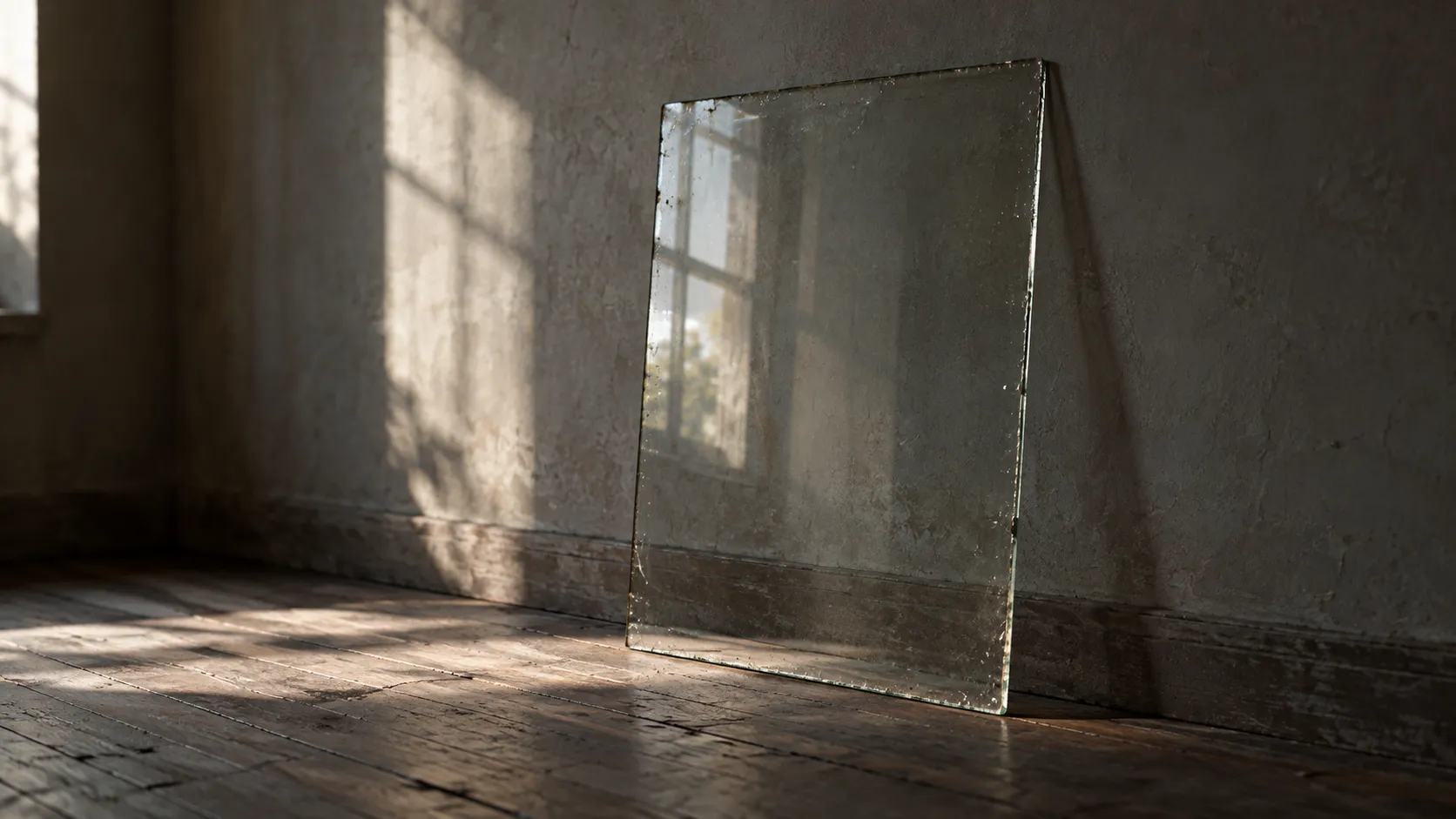
With Roger relaxed, eyes closed, attending to his breathing, Battino described a transparent barrier running floor to ceiling, wall to wall. On the other side was Younger You, about fifteen years old: reading, perhaps, or listening to music. The younger Roger looks up. The barrier simply disappears. He comes closer, makes contact, perhaps holding Roger’s hands, and somehow passes into him.
Then Battino offered the heart of it, in his own voice: that young Roger’s gift to him that afternoon was just being okay with himself and who he is today.
The session took about 70 minutes. When Roger opened his eyes, he said two words: “Thank you.”
That is all the case report tells us. Battino doesn’t report a dramatic cure, or follow-up results for Roger. What he observed was that Roger was deeply relaxed at the end, and that the unusual, surprising quality of the approach had disrupted his circular way of talking. It let him settle into trance. Battino’s reflection was that, underneath it all, he had simply given Roger permission to change.
Notice what Battino did not do. He didn’t ask Roger to dig for buried memories. He didn’t suggest that something had happened at fifteen. He barely needed Roger’s history at all. He offered a new experience, clearly imaginary, and let Roger fill in the details.
Why seeing yourself from outside helps
Roger’s endless circling is something psychologists know well. They call it rumination: thinking repeatedly and passively about your distress and its causes. It’s a key risk factor across many mental health conditions, and the psychologist Susan Nolen-Hoeksema showed it deepens and prolongs depression.
Research by the psychologists Ethan Kross and Özlem Ayduk suggests a way out. When people analyse painful experiences from a self-distanced perspective, watching themselves like a “fly on the wall” rather than reliving events through their own eyes, they experience less emotional and physiological distress in the moment. Over time, it protects them against the harmful effects of rumination. Strikingly, in one analysis, the more depressed people were, the more self-distancing helped.
Look again at Roger’s session. He stood on one side of the glass and watched a younger version of himself. Whatever else was happening, that’s self-distancing in its purest form.
The tested version: rewriting the scene
Modern therapy has its own, carefully tested way of meeting the younger self. It’s called imagery rescripting. People recall a painful childhood memory in imagination and change what happens in it. Often the adult self steps into the scene to protect the child.
In 2020, Katrina Boterhoven de Haan, Arnoud Arntz and colleagues published an international randomised trial comparing imagery rescripting with EMDR, one of the best-established trauma therapies, for adults with PTSD from childhood trauma before the age of 16. Participants had up to twelve 90-minute sessions. The results were clear: both treatments were effective. They reduced PTSD symptoms, and also depression, dissociation and trauma-related beliefs. Only 7.7% of participants dropped out.
The same idea runs through other modern therapies. The relationship therapist Desirae Ysasi describes helping clients reach a moment where the adult self says to the child who learned old survival patterns: I’m going to take care of you now. You can get behind me.
The crucial difference from the cases above is honesty about what’s happening. Imagery rescripting doesn’t claim the new version of events happened. Everyone knows it’s imagination. Its power comes from the new emotional experience, not from new “facts” about the past.
Meeting your future self
The idea works in the other direction too.
In 2011, the psychologist Hal Hershfield and his colleagues at Stanford had people interact, using immersive virtual reality, with realistic computer renderings of themselves aged into later life. In all four of their studies, people who met their future selves became more willing to choose later rewards over immediate ones. In one experiment, those who saw their age-progressed images were willing to put away about twice as much into long-term savings as those who didn’t.
It seems that the selves we used to be, and the selves we will become, can feel like strangers. Meeting them, even in imagination, changes how we treat them.
Back to the February Man
So, was Erickson healing Jane’s past, or rewriting it?
The research suggests that may be the wrong question. Orne showed that hypnotic regression never really takes anyone back. It’s always the adult mind imagining. Bridey Murphy and Paul Ingram show what happens when those imaginings are mistaken for history: a celebrity past life built from a neighbour across the street, and a man confessing to an event invented to test him.
But imagery rescripting, self-distancing and Hershfield’s future selves show the other side. When an imagined meeting is offered honestly, as an experience rather than a discovery, it can genuinely help people. It can quiet the loops, soften old pain, and change how they treat themselves.
The February Man was, by the book’s own account, Erickson’s construct: an invented friend, not a recovered memory. Whether Jane always understood that, we can’t know. But the line his case walks is the line that runs through this whole story. Going back to find out what happened is risky. Going back to have a new experience may be one of the most powerful things the mind can do.
Roger didn’t learn anything new about his past that afternoon. He met a fifteen-year-old who offered him permission to be okay. And he said the only thing that seemed to fit: Thank you.
This article touches on trauma and memory. If revisiting painful experiences, in hypnosis or otherwise consdier working with a trained mental health professional.
Further reading
The February Man
- Erickson MH, Rossi EL. The February Man: Evolving Consciousness and Identity in Hypnotherapy. Brunner/Mazel, 1989; Routledge reissue. https://www.routledge.com/The-February-Man-Evolving-Consciousness-and-Identity-in-Hypnotherapy/Erickson-Rossi/p/book/9780415990950
- Australian Society of Clinical Hypnotherapists. Review of The February Man. https://www.asch.com.au/?p=16545
Bridey Murphy
- Bernstein M. The Search for Bridey Murphy. Doubleday, 1956.
- “The strange tale of Bridey Murphy and Virginia Tighe.” The Skeptic (UK), September 2023. https://www.skeptic.org.uk/2023/09/the-strange-tale-of-bridey-murphy-and-virginia-tighe/
- Carroll RT. “Bridey Murphy.” The Skeptic’s Dictionary. https://www.skepdic.com/bridey.html
- Ducasse CJ. “How the Case of The Search for Bridey Murphy Stands Today.” Journal of the American Society for Psychical Research. 1960;54:3–22. (A sympathetic assessment.)
- Society for Psychical Research. “Bridey Murphy (reincarnation case).” Psi Encyclopedia. https://open-data.spr.ac.uk/sites/default/files/ebook/article/bridey_murphy_reincarnation_case-602.pdf
Age regression research
- Orne MT. “The mechanisms of hypnotic age regression: an experimental study.” Journal of Abnormal and Social Psychology. 1951;46:213–225. https://www.psych.upenn.edu/history/orne/orne1951jasp213225.html
- Orne MT. “Hypnosis.” In Lindzey G, Hall C, Thompson RF (eds.), Psychology. Worth, 1975. https://www.psych.upenn.edu/history/orne/orne1975inlindseyetalbc.html
- Kihlstrom JF, Frankel FH. “In memoriam: Martin T. Orne, 1927–2000.” International Journal of Clinical and Experimental Hypnosis. 2001. https://www.sas.upenn.edu/psych/history/orne/orneobitkilstrom.html
The Ingram case
- Ofshe RJ. “Inadvertent hypnosis during interrogation: false confession due to dissociative state; mis-identified multiple personality and the satanic cult hypothesis.” International Journal of Clinical and Experimental Hypnosis. 1992;40(3):125–156.
- Wright L. Remembering Satan: A Case of Recovered Memory and the Shattering of an American Family. Knopf, 1994.
- “Inmate makes a last bid to clear his name.” The Seattle Times, 6 June 1996. https://archive.seattletimes.com/archive/19960606/2333125/inmate-makes-a-last-bid-to-clear-his-name
- Pope KS. “A case study of Richard Ofshe’s analysis of the Paul Ingram case.” (Presents the opposing view.) https://kspope.com/memory/facade.php
- “Thurston County ritual abuse case.” Wikipedia. https://en.wikipedia.org/wiki/Thurston_County_ritual_abuse_case
Roger
- Battino R. “Reconnecting with Past Resources: Variations of the NLP Fast Allergy Cure.” Theoretical Frameworks. The Milton H. Erickson Foundation Newsletter. Vol. 45, No. 3 (December 2025), pp. 14–15. https://www.erickson-foundation.org/newsletter-archive
- Andreas C, Andreas S. Heart of the Mind. Real People Press, 1989, pp. 37–45.
Rumination and self-distancing
- Nolen-Hoeksema S. “Responses to depression and their effects on the duration of depressive episodes.” Journal of Abnormal Psychology. 1991;100(4):569–582.
- Ayduk Ö, Kross E. “From a distance: implications of spontaneous self-distancing for adaptive self-reflection.” Journal of Personality and Social Psychology. 2010;98(5):809–829. https://pmc.ncbi.nlm.nih.gov/articles/PMC2881638/
- Kross E, Ayduk Ö. “Boundary conditions and buffering effects: does depressive symptomology moderate the effectiveness of self-distancing?” Journal of Research in Personality. 2009;43(5):923–927. https://pmc.ncbi.nlm.nih.gov/articles/PMC2747112
- Ayduk Ö, Kross E. “Analyzing negative experiences without ruminating.” Social and Personality Psychology Compass. 2010;4(10):841–854. https://rascl.studentorg.berkeley.edu/assets/files/ayduk_kross_compass_2010.pdf
Imagery rescripting
- Boterhoven de Haan KL, Lee CW, Fassbinder E, et al., Arntz A. “Imagery rescripting and eye movement desensitisation and reprocessing as treatment for adults with post-traumatic stress disorder from childhood trauma: randomised clinical trial.” British Journal of Psychiatry. 2020;217(5):609–615. https://doi.org/10.1192/bjp.2020.158
- Lentz J. “In the Spirit of Therapy: Interview with Desirae Ysasi.” The Milton H. Erickson Foundation Newsletter. Vol. 45, No. 3 (December 2025), pp. 5–6.
The future self
- Hershfield HE, Goldstein DG, Sharpe WF, Fox J, Yeykelis L, Carstensen LL, Bailenson JN. “Increasing saving behavior through age-progressed renderings of the future self.” Journal of Marketing Research. 2011;48(SPL):S23–S37. https://vhil.stanford.edu/publications/increasing-saving-behavior-through-age-progressed-renderings-future-self